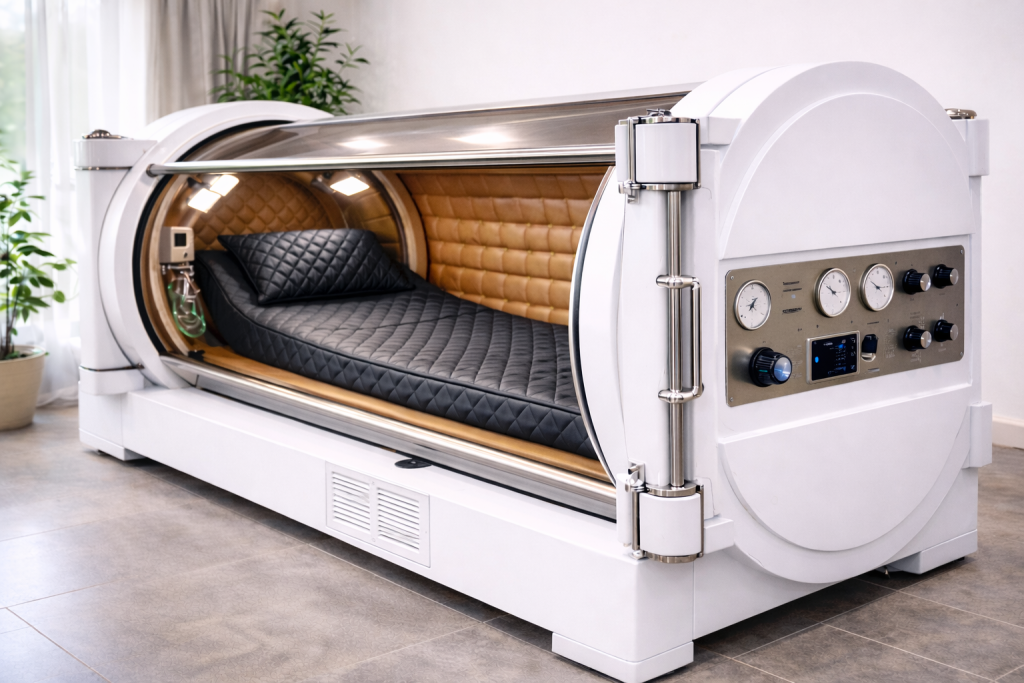
Hyperbaric oxygen therapy, often shortened to HBOT, is a wellness and recovery approach that involves breathing oxygen in a pressurized environment.
At normal air pressure, oxygen is carried mainly by red blood cells. Under increased pressure, oxygen can dissolve more deeply into the plasma, allowing it to move more freely through the body. This is why HBOT is often described as supporting oxygen delivery at a cellular level.
People explore HBOT for recovery, fatigue, and general wellness, as well as for performance support and long term health goals.
HBOT is often explored alongside other recovery tools such as heat and sauna use. You may also find our guide on infrared sauna vs traditional sauna helpful.
How hyperbaric oxygen therapy works
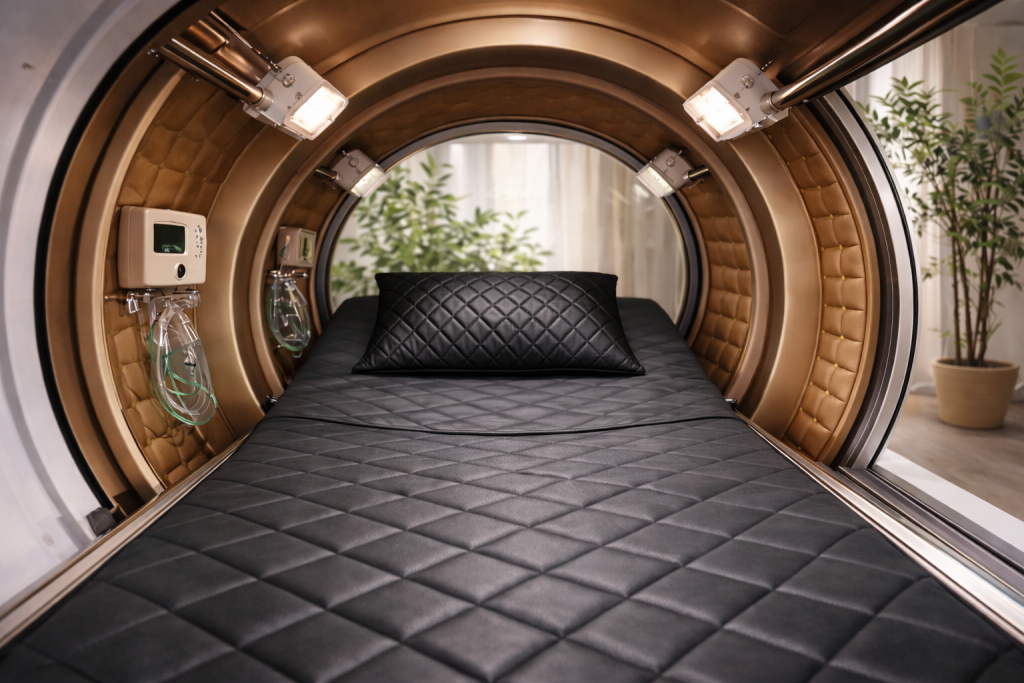
During an HBOT session, a person rests inside a chamber where air pressure is higher than normal. While inside, oxygen levels increase and the body is exposed to an environment that allows more oxygen to circulate through tissues.
This process is commonly described as supporting the body’s natural repair and recovery processes. Oxygen plays a role in how cells function, adapt, and recover, which is why HBOT is often associated with supporting circulation, tissue health, and overall recovery.
Sessions are usually calm and quiet. Many people read, listen to music, or simply rest while inside the chamber.
Why people use HBOT for recovery and wellness
People explore hyperbaric oxygen therapy for different reasons. Some are focused on recovery after training or long periods of physical stress. Others are interested in supporting energy levels, reducing fatigue, or maintaining long term wellness.
HBOT is often discussed in the context of consistency rather than one time use. Many people choose to use it as part of a routine, especially when recovery feels slower or when the body has been under repeated strain.
As interest in HBOT has grown, research has focused on where increased oxygen delivery may be most relevant.
What research suggests about HBOT
Research into hyperbaric oxygen therapy largely focuses on how increased oxygen availability under pressure affects tissues, circulation, and cellular function. Oxygen plays a central role in how cells produce energy, repair themselves, and respond to stress. By increasing the amount of oxygen dissolved in the blood and plasma, HBOT is thought to create a more supportive internal environment for healing and recovery in certain contexts. This is why much of the established research sits around tissue healing, circulation challenges, and situations where oxygen delivery is limited.
Beyond wound and injury related research, HBOT is also being explored in areas linked to inflammation, metabolic health, and nervous system regulation. Some studies examine how increased oxygen availability may influence inflammatory pathways, immune responses, and tissue stress, while others look at potential effects on fatigue, recovery, and overall resilience. There is also interest in how the calm, pressurized environment of HBOT sessions may support relaxation and nervous system balance. While evidence strength varies by condition and research is still ongoing, these areas continue to drive interest in HBOT as a supportive tool rather than a standalone solution.
Home vs clinic hyperbaric chambers
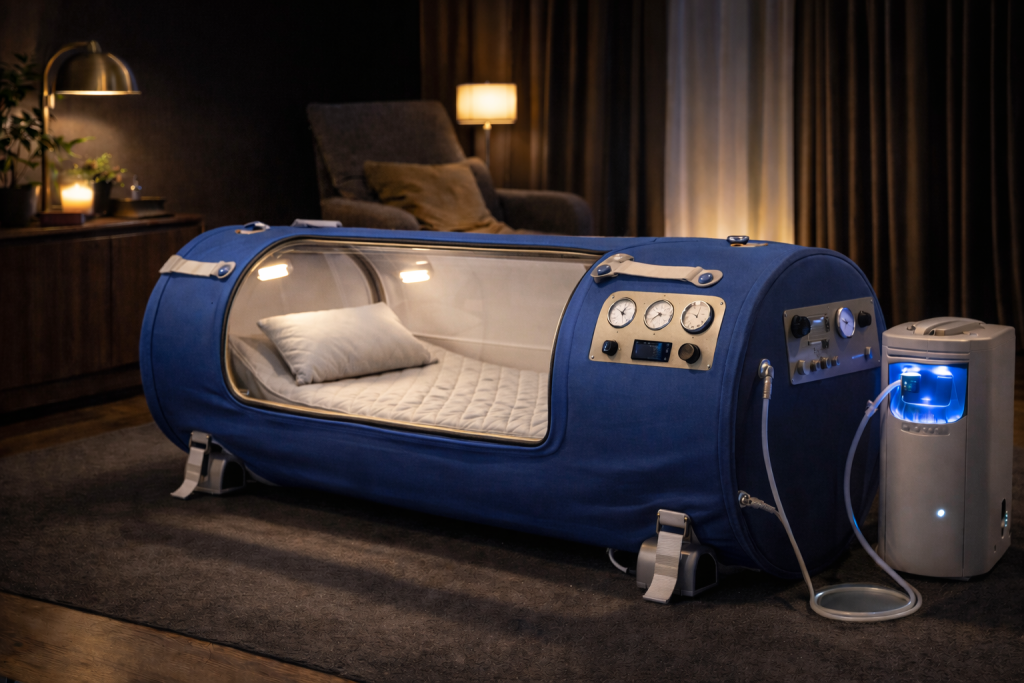
Hyperbaric chambers are available in different forms.
Clinic based chambers are typically larger and designed for professional or medical settings. Home and portable chambers are smaller and designed for personal wellness use.
Home chambers are often used by people who want regular access without visiting a clinic. These are commonly soft shell or portable designs that focus on comfort and convenience rather than clinical treatment settings.
The right option depends on individual needs, access, and how often someone plans to use HBOT.
What to consider before using HBOT
Hyperbaric oxygen therapy is not about rushing or pushing limits. Most people start slowly and pay attention to how their body responds.
Consistency, comfort, and proper use matter more than intensity. As with any wellness tool, it is important to understand how it fits into your routine and whether it aligns with your goals.
HBOT is often used alongside other recovery practices such as good sleep, movement, and stress management.
A simple perspective
HBOT is not a shortcut or a replacement for healthy habits. It is best thought of as a supportive environment that may help the body do what it already knows how to do more efficiently.
For many people, the appeal is not just performance, but feeling more balanced, recovered, and ready for daily life.

A final note
Hyperbaric oxygen therapy continues to grow in popularity because oxygen plays a fundamental role in how the body functions. By changing the environment in which oxygen is delivered, HBOT offers a different way to support recovery and long term wellness.
Like most recovery tools, the value often comes from patience, consistency, and listening to your body.
Pingback: Hyperbaric Oxygen Therapy Guide for Recovery and Wellness